FASCINATION
A Trip to the Moon
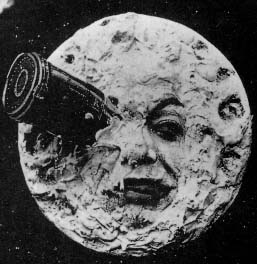
A Trip to the Moon (French: Le voyage dans la lune) is a 1902 French science-fiction adventure trick film written, directed and produced by Georges Méliès.
Inspired by Jules Verne's 1865 novel From the Earth to the Moon and its 1870 sequel Around the Moon, the film follows a group of astronomers who travel to the Moon in a cannon-propelled capsule, explore the Moon's surface, escape from an underground group of Selenites (lunar inhabitants), and return to Earth with a captive Selenite.
Although the film disappeared into obscurity after Méliès's retirement from the film industry, it was rediscovered around 1930.
A Trip to the Moon combined spectacle, sensation, and technical wizardry to create a cosmic fantasy that was an international sensation. It was ranked 84th among the 100 greatest films of the 20th century.
AWAKENING
Earthrise
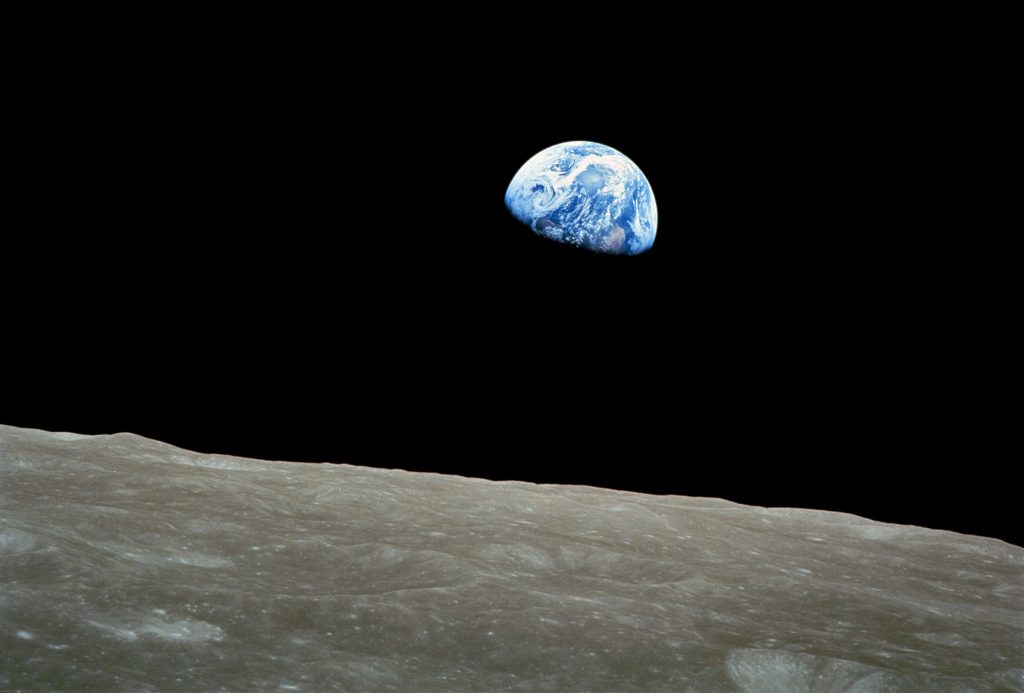
In December 1968, William Anders flew on the Apollo 8 mission, the first mission where humans traveled beyond low-Earth orbit, and the first crewed flight to reach and orbit the Moon.
When the spacecraft came out from behind the Moon for its fourth pass across the front, the crew witnessed an "Earthrise" for the first time in human history.
Anders reflected on the lasting impact of the Earthrise photograph, noting that it gained iconic status over time and helped people realize the need to take care of our fragile planet.
He remarked on the photograph's message for humanity, highlighting the contrast between our only home and the conflicts, including nuclear threats and terrorism, that we face.
“We came all this way to explore the Moon, and the most important thing is that we discovered the Earth.”
- William Anders, NASA Astronaut
FOOTSTEP
A Historical Moment
The United States’ Apollo 11 was the first crewed mission to land on the Moon, on 20 July 1969.
Creating history, a Saturn V rocket launched Apollo 11 from Launch Complex 39A at the Kennedy Space Center on July 16, 1969, at 13:32:00 UTC (09:32:00 EDT local time).
Apollo 11’s objective was to land safely on the Moon, rather than to touch down at a precise location.
The landing on the surface of the Moon occurred several seconds after 20:17:40 UTC on July 20, 1969.
On landing, Buzz Aldrin and Neil Armstrong believed they had 40 seconds of fuel left, including the 20 seconds’ worth which had to be saved in the event of an abort.
During the landing, Armstrong’s heart rate ranged from 100 to 150 beats per minute.
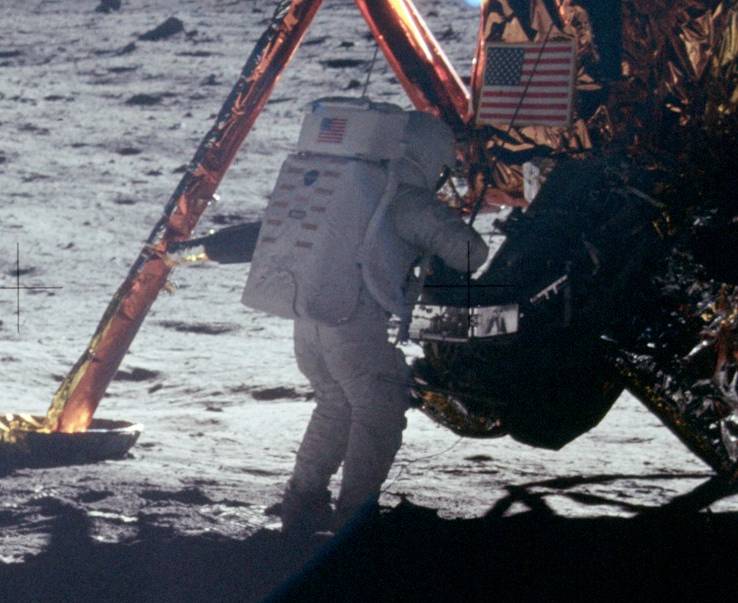
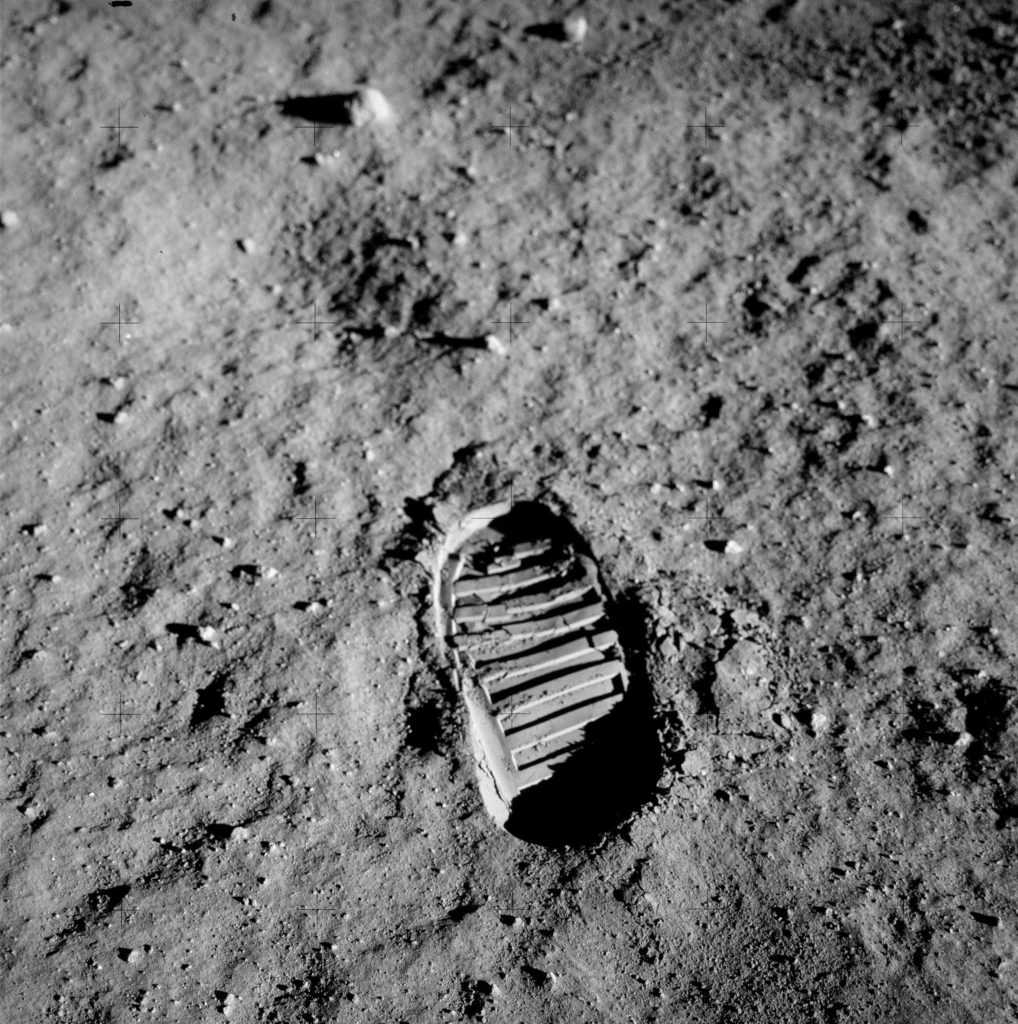
At 10:56 p.m. ET on July 20, 1969, the American astronaut Neil Armstrong put his left foot on the lunar surface and famously declared, “That’s one small step for [a] man, one giant leap for mankind.”
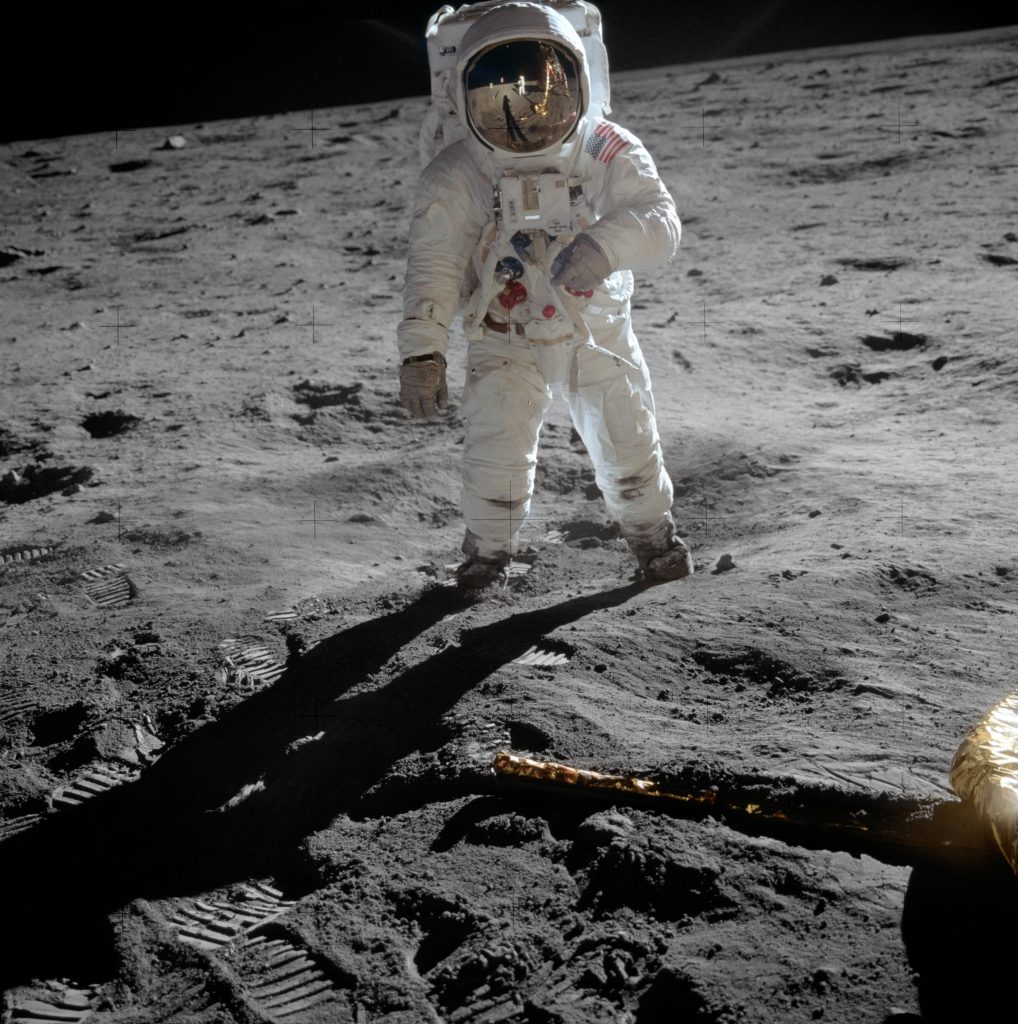
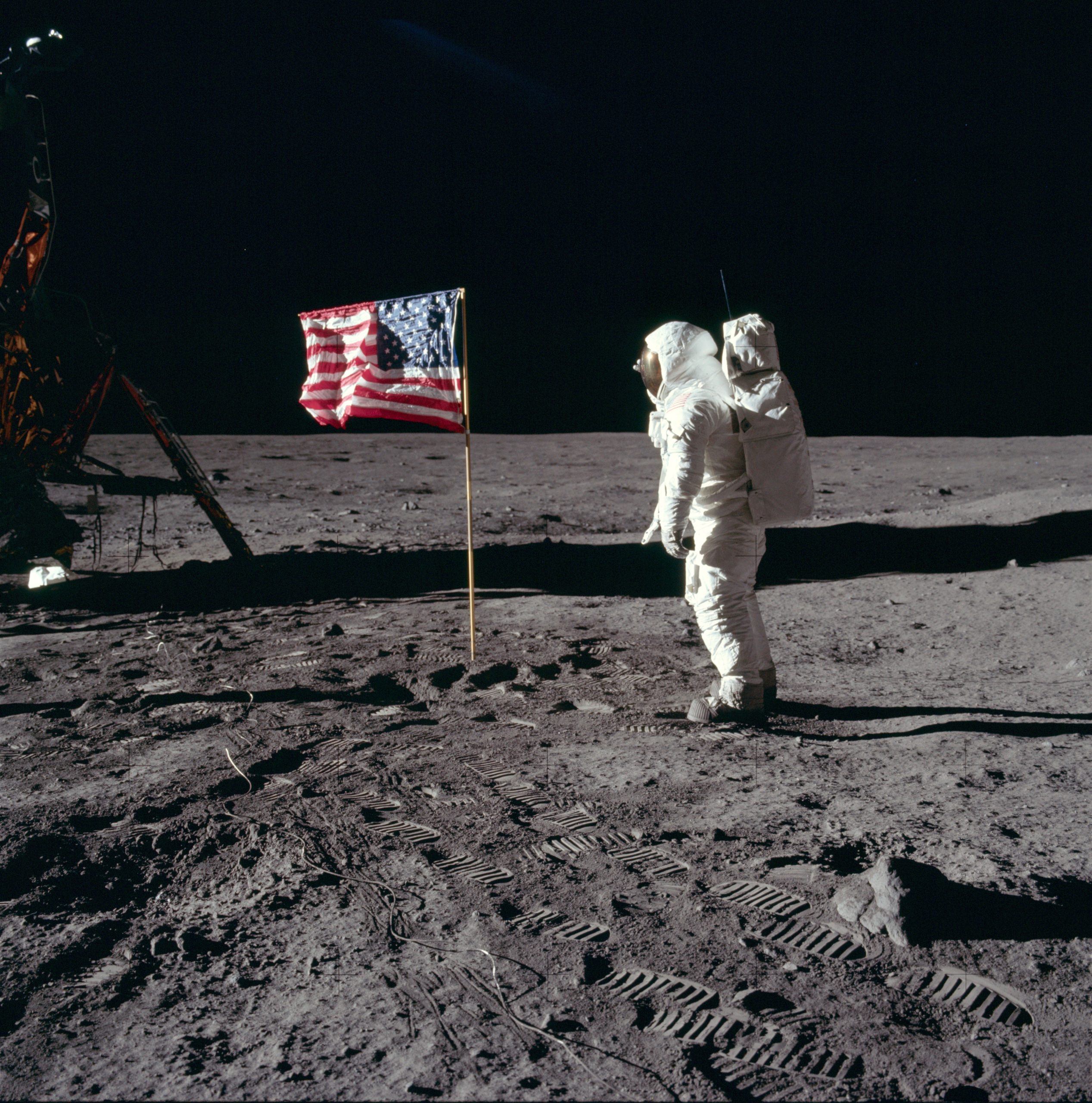
About 19 minutes after Armstrong’s first step, Aldrin joined him on the surface, becoming the second human to walk on the Moon. They began their tasks of investigating how easily a person could operate on the lunar surface.
Armstrong unveiled a plaque commemorating the flight, and with Aldrin, planted the flag of the United States.
Armstrong’s final task was to remind Aldrin to leave a small package of memorial items to Soviet cosmonauts Yuri Gagarin and Vladimir Komarov, and Apollo 1 astronauts Grissom, White and Chaffee.
There were six crewed U.S. landings between 1969 and 1972, and numerous uncrewed landings, with no soft landings happening between 22 August 1976 and 14 December 2013.
The United States is the only country to have successfully conducted crewed missions to the Moon, with the last departing the lunar surface in December 1972.
All soft landings took place on the near side of the Moon until 3 January 2019, when the Chinese Chang’e 4 spacecraft made the first landing on the far side of the Moon.
Also, in 2017, a Moon exploration program, called Artemis was announced by NASA.
"That’s one small step for [a] man, one giant leap for mankind."
- Neil Armstrong, NASA Astronaut
RETURNING TO THE MOON
Artemis Program
The goal of NASA’s Artemis campaign to explore the Moon for scientific discovery, technology advancement, and to learn how to live and work on another world as we prepare for human missions to Mars.
NASA will collaborate with commercial and international partners and establish the first long-term presence on the Moon.
NASA will land the first woman, first person of color, and first international partner astronaut on the Moon using innovative technologies to explore more of the lunar surface than ever before.
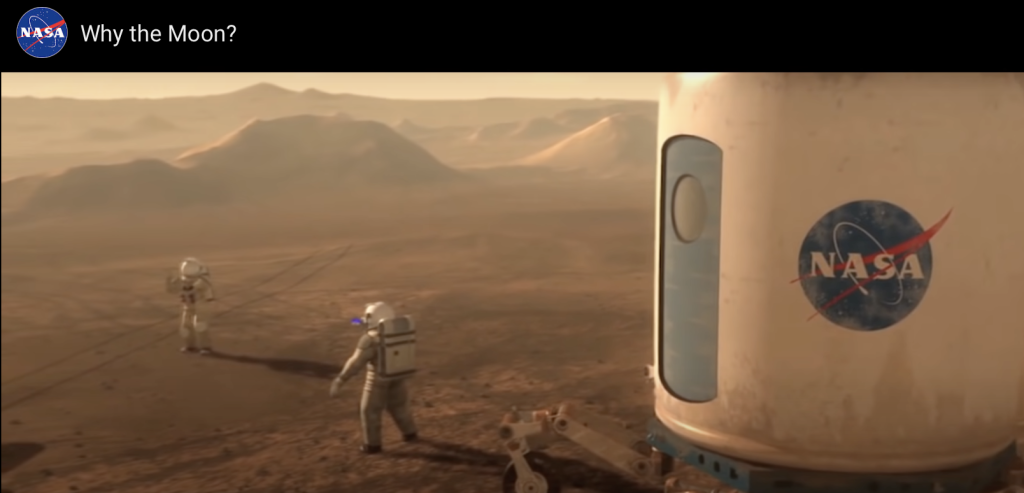
In this video above, Narrator Drew Barrymore and NASA team members explain why returning to the Moon is the natural next step in human exploration, and how the lessons learned from Artemis will pave the way to Mars and beyond.
LUNEXP'S
Digitalised Map of the Moon
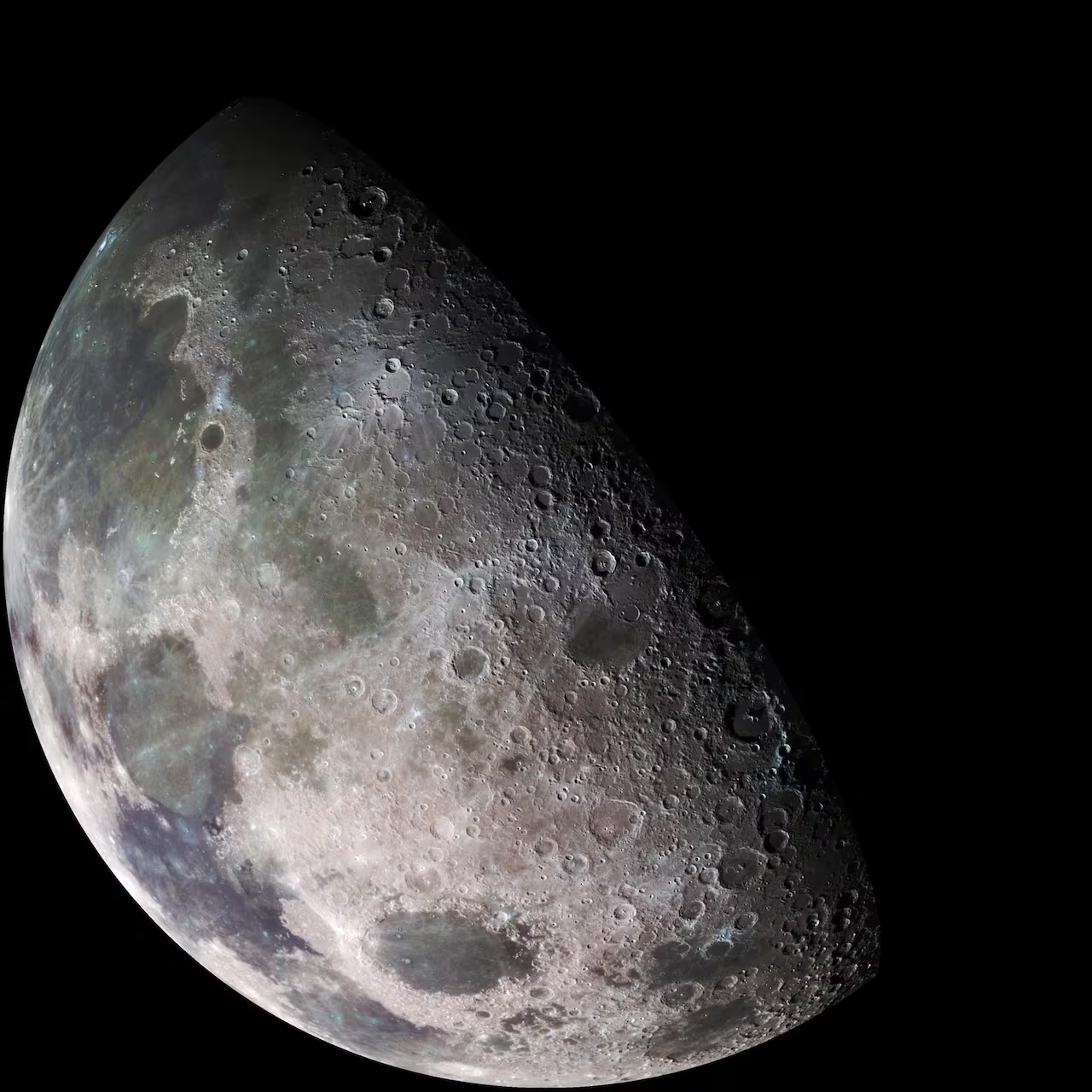
In order to support the Artemis mission and the next steps of the space exploration, at Lunar Exploration, our goal is to create the first detailed map of the Moon's surface.
By mapping lunar resources, we can accelerate space development and expand humanity's living sphere.
We aim to identify natural resources such as water, the key energy source on the Moon. In this way, Lunar Exploration can provide an instrumental tool for space development.
Our goal is to create a digital map and a Virtual Reality tool to discover the surface of the Moon. Leader of the “Digital Twins” technology, our digitalisation partner DWorld brings their unparalleled experience to complete a virtual “Walkable Moon Surface”.
Part of the project is to create a blockchain integration to purchase “virtual” land on the Moon as NFTs. The Moon has a surface of 38m km2, which will be divided to 38 million NFTs to support the development of the Meta Moon project.
Each NFT linked will have within the virtual home a big tv screen where people can watch the live streaming of space conferences, rocket launches, space walks, and space conferences such as ELEVATE Monte-Carlo.
LUNEXP'S
Global Educational Contribution
The Moon is an essential part of our life, tied to our existence. It not only provides navigation during the night sky, but influences many elements on earth such as its gravitational pull that impacts the tides of our oceans.
Creating educational content inside the virtual app is part of our social contribution.
Between July 1969 and December 1972 a total of 12 astronauts landed on the surface of the Moon for six of the Apollo missions. Apollo missions 11, 12, 14, 15, 16, and 17 each landed in different locations on the lunar surface.
These locations, each fascinating for their own particular reasons, sampled a wide range of lunar geology and terrain, from smooth mare plains to rugged ancient highlands.
All six landing sites are visible tonight.
Meta Moon will not only pinpoint the human landing sites from the past, but also virtually illustrate and 3D model humanities’ future footsteps and ambitions in the space race.
Objects in the Meta Moon will be touched, images and video presentations will be available for educational purposes. These contents can be accessed both while walking on the Moon and also in the people’s lunar home in their large tv screens.
Users can receive notifications to witness real-time space events, including live streaming of space launches, ISS spacewalks and space conferences.
LUNEXP'S
Collecting Lunar Data
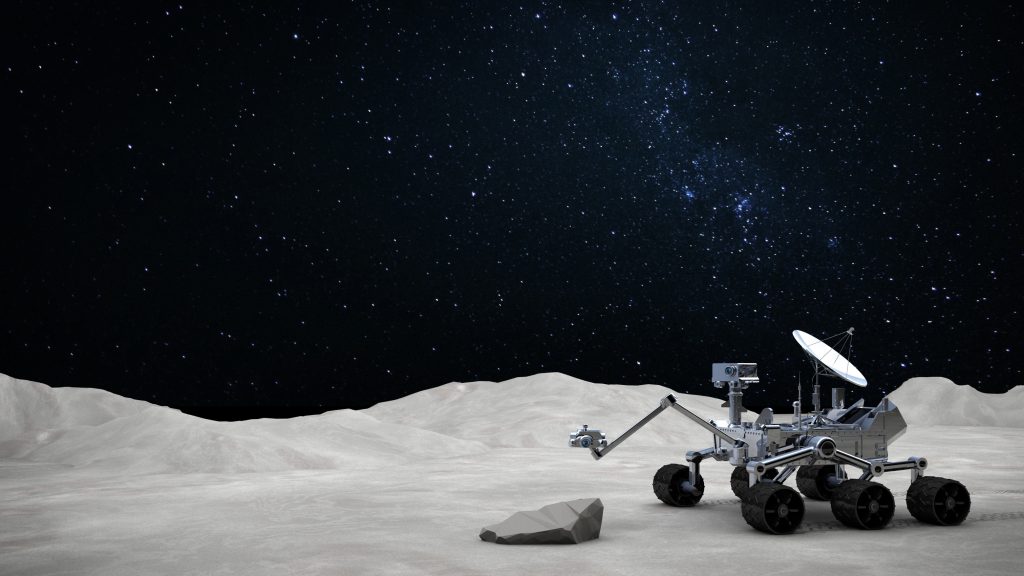
Collecting lunar data through Moon rovers in order to refine our map is the most ambitious and key objective for Lunar Exploration. Acquiring images of the lunar surface for both scientific and educational reasons can provide an instrumental tool for space development.
Robotic construction can advance unmanned lunar exploration, providing high-resolution surface images, environmental data, telemetry and
information on available natural resources that are invaluable assets for lunar market entry, future manned missions and the development of a lunar base.
Universities, researchers, government space agencies or private companies can all benefit from such data.